Sunday, July 14, 2019

Organization and Management ( Summative Test Lecture Modules)


MANAGEMENT - Management is the process of reaching organizational goals by working with and through people and other organizational resources. Characteristics of
management: It is a process or series of continuous and related activities. It involves and concentrates on reaching organizational goals. It strives for organizational goals by working with and through people and other organizational resources.
FUNCTIONS, ROLES & SKILLS OF A MANAGER (NOVEMBER 9, 2017)

4 FUNCTIONS OF MANAGEMENT
1.       PLANNING - choosing tasks that must be performed to attain organizational goals, to outline how the tasks must be performed and to indicate when they should be performed.
2.       ORGANIZING - the act of assigning the tasks developed in the planning stages to various individuals or groups to create a mechanism to put plans into action.
•      According to Henry Fayol, “To organize a business is to provide it with everything useful or its functioning i.e. raw material, tools, capital and personnel’s”.
•      ORGANIZING ->STAFFING- Recruiting, selecting, appointing the employees, assigning duties, maintaining cordial relationship and taking care of grievances of employees.
•      — Training and Development of employees, deciding their remuneration, promotion and increments.
•      — Evaluating their performance.
3.       LEADING/INFLUENCING - Influencing is also known as motivating, leading or directing by guiding the activities of organization members towards the fulfillment of the goals.
The purpose of influencing is to increase productivity.
4.       CONTROLLING - is both a managerial function and a continuous process where the manager performs the following roles:
Ø gathers information that measures performance;
Ø compares present performance to pre-established performance norms; and
Ø determines the next action plan and modification for meeting the desired performance parameters.

LEADERS VS. MANAGERS
•      Leadership is about getting people to understand and believe in your vision and to work with you to achieve your goals.
•       Managing is more about administering and making sure the day-to-day things are happening as they should.
FORMS OF BUSINESS ORGANIZATIONS
Organization-# A group of people (or businesses, etc.) who work together for an explicit purpose, with organized rules and structure.
Business Organization - # an individual/group of people that collaborate to achieve certain commercial goals. Some business organizations are formed to earn income for owners. Other, called nonprofits, are formed for public purposes. These businesses often raise money and utilize other resources to provide or support public programs.
3 BASIC FORMS OF BUSINESS ORGANIZATIONS
1. Sole Proprietorship-a business owned by only one person.
š  The owner faces unlimited liability; meaning, the creditors of the business may go after the personal assets of the owner if the business cannot pay them.
2. Partnership - Two or more owners
š  Partnership agreement (Express or implied, written or oral)
š  Presumption of equal rights of management
š  Presumption of equal allocation of profits & losses
š  Presumption of agency
3. Corporation - has a separate legal personality from its owners. Ownership in a stock corporation is represented by shares of stock.
š  Limited Liability Company (LLC)- Hybrid between a partnership & a corporation
š  One or more owners
š  Limited liability
š  No perpetual existence
š  not incorporated; hence, it is not considered a corporation.
š  The owners (stockholders) enjoy limited liability but have limited involvement in the company's operations.
COOPERATIVE - owned by a group of individuals and is operated for their mutual benefit.
š  Examples: water and electricity (utility) cooperatives, cooperative banking, credit unions, and housing cooperatives.
MANAGERIAL FUNCTION BASED ON THE LEVEL OF MANAGERIAL POSITION
•      First-level supervisors – 1st level manager
•      Middle managers – Division/Dept. Heads
•      Top managers – top level of the organization-CEO, VP, BOD)
ROLES OF A MANAGER
  1. INTERPERSONAL ROLES – leader, liaison, figurehead
  2. INFORMATIONAL ROLES – monitor, disseminator, spokesperson
  3. DECISIONAL ROLES – entrepreneur, disturbance handler, resource allocator, negotiator
SKILLS OF A MANAGER
     SKILL – the ability to perform a specific task to achieve the desired results.
  1. TECHNICAL SKILL – abilities/expertise to do the job required.
  2. HUMAN SKILLS – interpersonal skills
  3. CONCEPTUAL SKILLS – think critically and analytically
THE 5 LANGUAGES OF LOVE IN MANAGEMENT By Dr. Gary Chapman (1995)
  1. Words of Affirmation - uses words to communicate a positive message to another person.
  2. Quality Time - giving the person your focused attention.
  3. Acts of Service - providing assistance.
  4. Tangible Gifts - physical items.
  5. Physical Touch - human to human contact.
**********************************************************************************************************************************************************************************************************************
Management Theories – set of general rules = guide the managers to manage.

4 MANAGEMENT THEORIES

1.       Classical Theories
a. Scientific Management - proposed by Taylor (1880), Jill Perth and Gantt (Chart) was developed by the impact of natural methodology and it stressed rational thinking based on the scientific work to improve individual staff capacity. (principles of efficiency & solution=improvement)
b. Administrative View - proposed by Henri Fayol and Max Weber highlighted the importance of operational efficiency on the whole organization to develop a general theory explaining the good management of the elements required which include infrastructure. (Institution & Order = Goals) (Organizational structure)
•      Henri Fayol - French Management Theorist - Father of Modern Operational Management, POCCC – Plan, Organize, Command, Coordinate, Control

2.       Behavioral Theories
a. Hawthorne Experiment (1924) - Classical Theory is mainly focused on the organization and staff with mechanical perspective concentrated on the point of view of human nature, importance of individual attitudes and behaviors, methods for managers to motivate employees for improving productivity.
Workers attitudes toward their managers affect the level of workers’ performance.
b. Interpersonal Perspective -proposed by Maslow and McGregor that provided a basic foundation of the behavioral view on human relations and was further derived from the Hawthorne experimental results showing that the productivity of employees is affected by the interaction and affective atmosphere of the management that leads to better performance.
Douglas McGregor (1957) - THEORY X & Y
•      THEORY X – negative view: employees as unmotivated & unwilling workers = close supervision & control thru penalty.
•      THEORY Y – positive view: employees as energetic, creative & willing workers = encouragement, delegation and trust

3.       Quantitative Theory
a. Management science and operations management perspective view - Originated in World War II and revealed that the spirit of scientific management commitment, use of quantitative measurement and computer modeling theory such as analysis of complex business problems.

4.       New Theories
a. Contingency Perspective - how to adapt the environmental change and believes that there is no "universal solution" for the management to solve such conditions since all of management challenges depend on varying circumstances.
b. Systems Perspective (1890-1900) - System POV + Contingency Perspective = New Theory (STANDARD)
- It successfully meets the inconsistencies that sprouted in the Classical and Behavioral Theories.

FORCES IN THE FIRM’S ENVIRONMENT (PESTN)
1.       POLITICAL FORCES- # LEGAL, REGULATIONS, POLITICAL ORIENTATIONS, GOVERNMENT POLICIES, AND COMPLIANCE PROCEDURES OF GOVT. BODIES.  # Taxes, business reg., fin. Report
2.       ECONOMIC FORCES- # economic conditions relevant to business.
# employment rates, income levels, inflation rates, savings, insurance, investments rates, conversion rates of money.
3.       SOCIOCULTURAL FORCES - # people’s characteristics and lifestyles that impinge on the operations of a firm.
# social norms, customs, and values, POPULATION, TRENDS, HEALTH, CONSUMER TASTES, ETC.

š  *POTENTIAL MARKET- COMPOSED OF PEOPLE COMING FROM DIFFERENT COUNTRIES AND CULTURES.
4.       TECHNOLOGICAL FORCES - # INNOVATIONS IN DIGITAL TECHNOLOGY, INVENTIONS IN TRANSPORTATION AND COMMUNICATIONS, BREAKTHROUGHS IN MEDICAL SCIENCE.
# CELLPHONES, BULLET TRAINS, ETC.
5.       NATURAL RISKS - # CLIMATE CHANGE, GLOBAL WARMING, DISASTER.
# FLOOD, TYPHOON, EARTHQUAKES, LANDSLIDES, VOLCANIC ERUPTIONS, TSUNAMIS, STORM SURGES.

ENVIRONMENTAL SCANNING (ES) - # PROCESS OF ASSESSING THE INTERNAL AND EXTERNAL OPERATING ENVIRONMENT OF A FIRM TO ANALYZE ITS SWOT.
2 Types OF Environment
  1. Public environment – the people as a whole
  2. Private environment – particular or exclusive person, group or organization.

TWO ELEMENTS OF E.S.
1. EXTERNAL ANALYSIS – EXAMINES THE OPPORTUNITIES AND THREATS IN THE FIRM BASED ON THE DIFFERENT FORCES IN THE ENVIRONMENT, ANALYSIS OF COMPETITIVE FORCES-THE COMPETITORS, BUYERS, SUPPLIERS, & SUBSTITUTE FOR THE FIRM’S PRODUCT OR SERVICE.
2. INTERNAL ANALYSIS – EXAMINES THE STRENGTHS AND WEAKNESSES OF THE CONDITIONS INSIDE THE FIRM SUCH AS SKILLS AND COMPETENCIES OF EMPLOYEES, CAPACITIES OF RESOURCES, ORGANIZATIONAL CULTURE, AND TEAM SPIRIT.

MODULE 4. THE FIRM AND ITS ENVIRONMENT

COMPETITIVE ADVANTAGE - the distinguishing features / characteristics of a business organization that enable it to perform better than rival organizations.

2 ENVIRONMENTAL FACTORS
  1. Environmental Uncertainty – lack of complete info about the current and future environment of the firm.
  2. Environmental Complexity – presence of numerous factors prevailing in the environment that change over time.

LOCAL & INTERNATIONAL BUSINESS ENVIRONMENT OF THE FIRM

LOCAL BUSINESS ENVIRONMENT
š  THE SPECIFIC INDUSTRY TO WHICH THE COMPANY BELONGS AND DIRECTLY DEAL WITH.
- THE CUSTOMERS, SUPPLIERS, COMPETITORS, REGULATORS AND EMPLOYEES.

INTERNATIONAL BUSINESS ENVIRONMENT
š  THE BUSINESS ACTIVITIES PERFORMED BY COMPANIES OPERATING IN FOREIGN LOCATIONS.

UNDERSTANDING THE LOCAL ENVIRONMENT THROUGH AN INDUSTRY ANALYSIS
# INDUSTRY – A GROUP OF COMPANIESOFFERING THE SAME OR SIMILAR PRODUCTS OR SERVICES.

PORTER’S FIVE FORCES MODEL
1. INDUSTRY COMPETITORS –THE RIVALRY AMONG EXISTING FIRMS.
2. SUPPLIERS (PRODUCERS) – THE BARGAINING POWER OF SUPPLIERS OR PRODUCERS.
3. BUYERS (CONSUMERS) – THE BARGAINING POWER OF BUYERS AND CONSUMERS.
4. POTENTIAL ENTRANTS– THE THREAT OF NEW ENTRANTS.
5. SUBSTITUTES – THE THREAT OF SUBSTITUTE PRODUCTS THAT WILL SERVE AS COMPETITORS TO EXISTING PRODUCTS.

UNDERSTANDING THE INTERNATIONAL ENVIRONMENT THROUGH GLOBAL MANAGEMENT
# GLOBAL MANAGEMENT (SCHERMERHORN 2011) – MANAGEMENT OF BUSINESSES AND ORGANIZATIONS WITH OPERATIONS IN MORE THAN ONE COUNTRY.

GLOBALIZED MARKET ENVIRONMENT
š  FREE TRADE AGREEMENTS
š  REGIONAL ECONOMIC ALLIANCES AMONG NATIONS
š  TECHNOLOGICAL DEVELOPMENTS/INNOVATIONS
EX. AFTA - ASEAN FREE TRADE AGREEMENT
      APEC – ASIA PACIFIC ECONOMIC COOPERATION
      E-COMMERCE (TECHNOLOGY
      MIGRATION OF LABOR ACROSS COUNTRIES

GLOBALIZATION
š  THE GROWING INTERDEPENDENCE AMONG PEOPLE AROUND THE WORLD.
 - EXAMPLE: CELL PHONE GADGET

4 WAYS TO COMPETE IN LOCAL & INTERNATIONAL BUSINESS
  1. LOWER COST
  2. QUALITY – UNIQUE OR MORE DESIRABLE FEATURES
  3. SPEED (FLEXIBILITY) – DELIVERY, RESPONSE
  4. INNOVATION – NEW WAYS/FEATURES

3 WAYS TO EXPAND INTO INTERNATIONAL & GLOBAL BUSINESS
  1. EXPORTING-SELLING LOCALLY MADE PRODUCTS IN FOREIGN COUNTRIES & IMPORTING – BUYING FOREIGN-MADE, SELL IN LOCAL MARKETS
  2. LICENSING & FRANCHISING
  3. JOINT VENTURES & STRATEGIC ALLIANCES


Wednesday, July 3, 2019

Sample Infographics

The Art of Blooming Late Kevin Evers

The Art of Blooming Late

FROM THE MAY–JUNE 2019 ISSUE

Mozart was a celestial genius, but he struggled like a mere mortal during his teens and early twenties. Though already a prolific composer, he had to work as an organist and concertmaster in his native Salzburg to make ends meet. Underpaid, unfulfilled, and hemmed in by his frustratingly average gigs, he felt a burning desire to devote more time and energy to his art. So after a period of doubt and deliberation, that’s exactly what he did. He quit his job, set up shop in Vienna, and embarked on what turned out to be the most productive and creative period of his life.
TIM BOWERS
Even if you never hope to reach Mozart’s level of mastery, you may relate to his need to break free from convention. Maybe you feel as if your job is like painting by numbers. Maybe you’ve done everything right—excelled at school, worked hard, and landed a good, high-paying job—but you’re tired of being just like everyone else. Maybe you yearn to achieve something that is unmistakably you.
If you aspire to do more personally fulfilling work—say, to found a start-up or turn a hobby into a full-fledged career—drafting a plan of action can be daunting. Even so, a few newly released books suggest that it’s entirely possible to develop the wherewithal, nerve, and clarity of purpose to create your own version of Mozart’s Don Giovanni.
In Aristotle’s Way, the classicist Edith Hall describes the ancient philosopher’s belief that becoming conscious of our skills, talents, and aptitudes (dynamis) and then using our resources to make the most of them (energeia) is the foundation of living a good life. If you’re not working toward reaching your unique potential—as Mozart did—it’s normal to feel dissatisfied. If that’s the case, says Aristotle, it’s your duty to make things right. The philosopher John Kaag, author of Hiking with Nietzsche, agrees. “The self does not lie passively in wait for us to discover it,” he writes. “Selfhood is made in the active, ongoing process, in the German verb werden, ‘to become.’”
What, then, is holding you back? Rich Karlgaard, the publisher of Forbes magazine and author of Late Bloomers, argues that our culture’s obsession with early achievement dissuades us from pursuing our passions. Instead of having varied interests, studying widely, and taking our time—essentials for self-discovery—we’re encouraged to ace tests, become specialists right away, and pursue safe, stable, and lucrative careers. As a result, most of us end up choosing professional excellence over personal fulfillment, and often we lose ourselves in the process. According to the journalist David Epstein, author of Range, our obsession with specialization has infiltrated the ranks of youth sports coaches and helicopter parents, and it defies logic. Unless your job requires repetitive, routine tasks, being a specialist isn’t an asset. Having a wide range of skills and experiences is more beneficial because it allows you to be nimble and creative.
The authors of Dark Horse, Todd Rose and Ogi Ogas of Harvard’s School of Education, noticed the negative effects of early specialization in a study of people who came out of nowhere to achieve great success. “Despite feeling bored or frustrated, underutilized or overwhelmed,” the two write, “most dark horses reluctantly plodded along for years before finally coming to the realization that they were not living a fulfilling life.” Then, after a period of restless, quiet ambition, these seemingly average people—administrative assistants, engineers, IT managers—were able to transform their “cravings, predilections, and fascinations” into successful careers as master sommeliers, lifestyle entrepreneurs, and celebrated craftsmen.
To prompt this kind of revolution in your own life, Rose and Ogas suggest creating a micromotive, or a goal tailored to an extremely specific activity that truly inspires you. For example, when Korinne Belock left her job as a political aide to form Urban Simplicity, a firm that declutters and redesigns homes and offices, her micromotive was “organizing physical space.” Note that she didn’t say “doing something creative” or “starting my own business.” Those declarations are too general and fuzzy to be acted on. Instead, she identified a task that sparked within her an outsized amount of curiosity and pleasure and used it as her guide.
As you move forward, there are a few things to keep in mind. First and foremost, it’s never too late to “become” yourself. Aristotle, for example, didn’t fully devote himself to writing and philosophy until he was nearly 50. There are also benefits to taking a long, winding path to self-fulfillment. Remember that age typically brings wisdom, resilience, humility, self-knowledge, and creativity. This is one reason the average age of founders of high-growth start-ups is 45. Citing the work of developmental psychologist Erik Erikson, Karlgaard writes, the “ages 40 to 64 constitute a unique period where one’s creativity and experience combine with a universal human longing to make our lives matter.”
That said, once you’ve decided to embark on the journey, it may take years, if not longer, to reach your destination. But as research has shown, small daily changes can have a compound effect and slowly but surely lead you closer to the person you think you ought to be.
If you ever get stuck, think of Joanne, a talented and creative woman who bounced from job to job throughout her twenties, working as a researcher, secretary, and English-as-a-second-language teacher. Optionless and clinically depressed, she felt like a total failure. But she took that feeling of despair and used it to her advantage. Since she hadn’t succeeded in following a standard path, she felt liberated to do what she’d always wanted to do: write fantasy novels for children. As she would later recount, “I stopped pretending to myself that I was anything other than what I was.”
You’ve probably heard of her. Her pen name is J.K. Rowling.
Now get to work.
A version of this article appeared in the May–June 2019 issue (pp.166–167) of Harvard Business Review.

Kevin Evers is an associate editor at Harvard Business Review.

Tuesday, July 2, 2019

MGA PANGULO NG PILIPINAS AS OF JULY 2019


enter image description here
Source: Google Images
Narito ang listahan ng mga naging at kasalukuyang pangulo ng Pilipinas. Sa ilalim ng kasalukuyang konstitusyon, ang pangulo ng Pilipinas ay ang may pinakamataas ng katungkulan sa gobyerno. Sya rin ang nagsisilbing commander-in-chief ng sandatahang lakas ng Pilipinas o "Armed forces of the Philippines". Sa Pilipinas, ang pangulo ay halal ng taong bayan. Ang sinumang may wastong gulang mula 18 pataas ay maari nang bumoto.

Ang kwalipikasyon naman sa pagka pangulo ay ang mga sumusunod:

- Rehistradong botante ng Pilipinas
- Marunong bumasa at sumulat
- At least 40 years old
- Kasalukuyang naninirahan sa Pilipinas sa loob ng sampung taon bago ang eleksyon
Ayon sa 1987 Philippine Constitution, sa ilalim ng Article 7, Section 4
"The President and the Vice-President shall be elected by direct vote of the people for a term of six years which shall begin at noon on the thirtieth day of June next following the day of the election and shall end at noon of the same date, six years thereafter. The President shall not be eligible for any re-election. No person who has succeeded as President and has served as such for more than four years shall be qualified for election to the same office at any time."
Samakatuwid ay hindi na sya maaring tumakbo pang muli sa susunod na eleksyon. (Katulad din ng Vice President).
Ang presidente ng Pilipinas ay mayroon lamang anim (6) na taon para magsilbi. Ngunit bago pa ang 1987 Philippine Constitution, si dating Pangulong Ferdinand Marcos ay nagsilbi ng mahigit dalawampung taon o 20 years.
Narito ang listahan ng mga naging at kasalukuyang presidente ng Pilipinas:
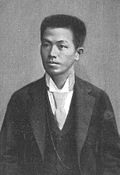
  1. Emilio F. Aguinaldo - Dineklara ni Aguinaldo ang kalayaan ng Pilipinas noong June 12, 1898 at siya ay nahirang na pangulo ng Pilipinas sa Malolos, Bulacan noong January 23, 1899.
enter image description here
Source: Wikipedia
Matapos matalo ang mga espanyol sa tulong ng mga Amerikano, hindi kinilala ng mga Amerikano ang pamamahala ni Aguinaldo. Noong February 4, 1899, nagdeklara ang Pilipinas ng gyera kontra Amerikano. Ngunit dalawang taon ang lumipas, noong March 23, 1901, si Aguinaldo ay nahuli ng mga Amerikano at nagtapos ang pamamahala nito.
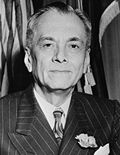
  1. Manuel L. Quezon - Nanalo si Quezon sa pagkapangulo noong 1935. Kalaban nya sa pagka pangulo si Aguinaldo at ang isa pang karibal na si Gregorio Aglipay.
enter image description here
Source: Wikipedia
Si Quezon ay nanilbihihan bilang pangulo ng Pilipinas sa loob ng dalawang termino mula 1935 hanggang 1941 at 1941 hanggang 1944. Si Quezon ay naging dating tauhan ni Aguinaldo noong panahong kalaban pa ng pamahalaan ang mga Amerikano.
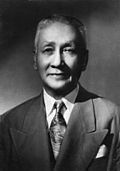
  1. Sergio Osmeña Sr. - Si Osmeña ay naging ika-tatlong pangulo ng Pilipinas matapos ang pagkamatay ni Quezon noong 1944 sa sakit na tuberculosis.
enter image description here
Source: Google Images
Si Osmeña ay nagsilbi lamang sa loob ng mahigit isang taon sapagkat itinuloy lamang nito ang termino ni Quezon hanggang 1946. Nagpasyang tumakbo si Osmeña noong 1946 ngunit bigong manalo laban kay Manuel Roxas.
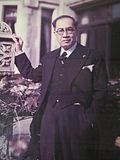
  1. Jose P. Laurel - Si Laurel ay ang unang naging pangulo ng ikalawang republika ng Pilipinas noong 1943 hanggang 1945. Sinasabing si Laurel ay namuno noong panahong ang Pilipinas ay nasa ilalim pa ng mga hapon.
enter image description here
Source: Wikipedia
Matapos ang pagkamatay ni Roxas ay tumakbo sa pagkapangulo si Laurel noong 1949 ngunit ito'y bigo laban kay Elpidio Quirino.
Si Jose P. Laurel ang nagtatag ng Lyceum of the Philippines University noong 1952.
  1. Manuel Roxas - Si Roxas ay nahalal na pangulo noong 1946 at siya ang itinuturing na huling presidente sa ilalim ng commonwealth. Ang "Commonwealth" ay ang pangalan ng pamamahalaan ng Pilipinas sa ilalim ng panahon ng mga Amerikano.
enter image description here
Source: Wikipedia
Nagsilbi si Roxas bilang pangulo hanggang sa kanyang kamatayan noong 1948 dahil sa heart attack.
  1. Elpidio Quirino - Si Quirino ay nahalal na pangulo noong 1949 laban kay Jose P. Laurel. Si Quirino ay nanilbihang bilang pangulo hanggang taong 1953. Muli ay tumakbo sya sa pagkapangulo noong 1953 ngunit bigong manalo laban kay Ramon Magsaysay.
enter image description here
Source: Wikipedia
Si Quirino ang unang pangulo ng ikatlong republika ng Pilipinas.
  1. Ramon Magsaysay - Si Magsaysay ay nahalal na pangulo noong 1953, tinaguriang "Kampyon ng Masa". Simula noong mahalal ay binuksan ni Magsaysay ang Malacañang sa publiko. Ngunit maagang natapos ang termino ni Magsaysay sapagkat siya'y namatay sa plane crash noong 1957.
enter image description here
Source: Wikipedia
Tinatayang dalawang milyong katao ang dumalo sa kanyang libing.
  1. Carlos P. Garcia - Matapos ang pagkamatay ni Magsaysay noong 1957, nanumpa si Garcia bilang ikawalong pangulo ng Pilipinas. Nagsilbi syang pangulo mula 1957 hanggang 1961. Siya ay kilala sa polisiyang "Filipino First". Ang patakarang ito ay prayoridad ang mga Pilipinong negosyante bago ang mga dayuhang investor.
enter image description here
Source: Wikipedia
Muling tumakbo si Garcia sa pagkapangulo noong 1961 ngunit bigong manalo laban kay Diosdado Macapagal.
  1. Diosdado Macapagal - Si Macapagal ay nagsilbing pangulo ng Pilipinas mula 1961 hanggang 1965. Pinangunahan ni Macapagal ang Agricultural Land Reform Code of 1963 o ang reporma sa lupa ng mga magsasaka.
enter image description here
Source: Wikipedia
Noong 1965, muling tumakbo sa pagkapangulo si Macapagal ngunit ito'y bigo laban kay Ferdinand Marcos.
  1. Ferdinand Marcos - Si Marcos ay nahalal noong 1965 at nagsilbing pangulo hanggang 1986. Si Marcos ang pinakamatagal na nanilbihang bilang pangulo ng Pilipinas sa loob ng mahigit (20) dalawampung taon.
enter image description here
Source: Wikipedia
Noong 1986 dulot ng People Power Revolution, kasama ang pamilya ay nagtungo si Marcos papuntang Hawaii. Doon na rin namatay si Marcos noong September 28, 1989. Ang kanyang labi ay dinala sa Pilipinas noong termino na ni Pangulong Fidel Ramos.
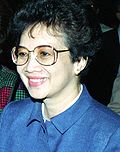
  1. Corazon C. Aquino - Si Aquino ay inihalal ng taong bayan bilang unang babaeng pangulo noong 1986. Pinangunahan ni Aquino ang "1987 Philippine Constitution".
enter image description here
Source: Google Images
Si Aquino ay nagsilbi bilang pangulo hanggang taong 1992.
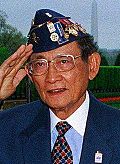
  1. Fidel V. Ramos - Si Ramos ay ang ika labindalawang pangulo ng Pilipinas noong 1992 laban kay Miriam Defensor Santiago.
enter image description here
Source: Wikipedia
Nanilbihan si Ramos bilang pangulo hanggang taong 1998.
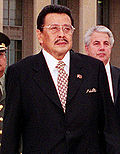
  1. Joseph Ejercito Estrada - Si Estrada ay nahalal maging pangulo taong 1998. Siya ang ika labintatlong pangulo ng Pilipinas. Bago sumabak ng politika ay sikat na si Estrada bilang artista sa pinilakang tabing.
enter image description here
Source: Wikipedia
Nanilbihan bilang pangulo si Estrada hanggang sa sya ay mapatalsik dulot ng ikalawang People Power Revolution noong 2001.
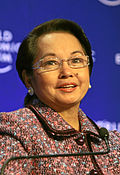
  1. Gloria Macapagal-Arroyo - Si Arroyo ay ang ikalawang babaeng presidente ng Pilipinas. Matapos mapatalsik sa pwesto si Estrada ay nanumpa si Arroyo noong 2001.
enter image description here
Source: Wikipedia
Naging kontrobersyal din si Arroyo matapos pumutok ang "Hello Garci Scandal" na di umanoy nakipag-usap si Arroyo sa noo'y Election Commissioner Virgilio Garcillano habang kasagsagan ng eleksyon noong 2004. Kalauna'y humingi si Arroyo ng paumanhin mula sa publiko. Nanilbihan si Arroyo hanggang sa kanyang huling termino noong 2010
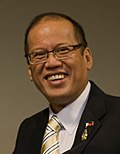
  1. Benigno S. Aquino III - Si Aquino ay nahalal sa pagkapangulo noong 2010 sa ilalim ng liberal party. Siya rin ang ika labinlimang pangulo ng Pilipinas sa ilalim ng kasalukuyang republika ng Pilipinas.
enter image description here
Source: Wikipedia
Nanilbihan si Aquino hanggang 2016.
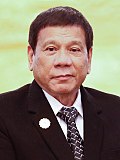
  1. Rodrigo Roa Duterte - Ang kasalukuyang presidente ng Pilipinas ay si Duterte. Nahalal sya noong 2016 laban kina Mar Roxas, Grace Poe, Jejomar Binay at Miriam Defensor Santiago.
enter image description here
Source: Wikipedia
Bago mahalal na pangulo ay nagsilbing alkalde ng Davao si Duterte sa loob ng apat na termino or mahigit dalampung (20) taon.

Featured Post

CORALINE BY NEIL GAIMAN (ENGLAND)

CORALINE BY NEIL GAIMAN (ENGLAND) Coraline [Excerpt] by Neil G...